
































































































































































































A complete, rules-first guide to the UEFA Nations League: how the four leagues are structured, how the group phase works, who goes up, who goes down, which teams enter the play-offs, and exactly what changes in the 2026/27 edition.
The UEFA Nations League is a competition for Europe's 54 men's national teams, divided into four divisions called Leagues A, B, C and D. Each league is split into groups of three or four teams who play each other home and away. Teams are promoted to a higher league or relegated to a lower one based on where they finish, and the best teams in League A go on to a knockout final tournament to decide the champion. The 2026/27 edition runs from 24 September to 17 November 2026, with quarter-finals and play-offs in March 2027 and the finals in June 2027.
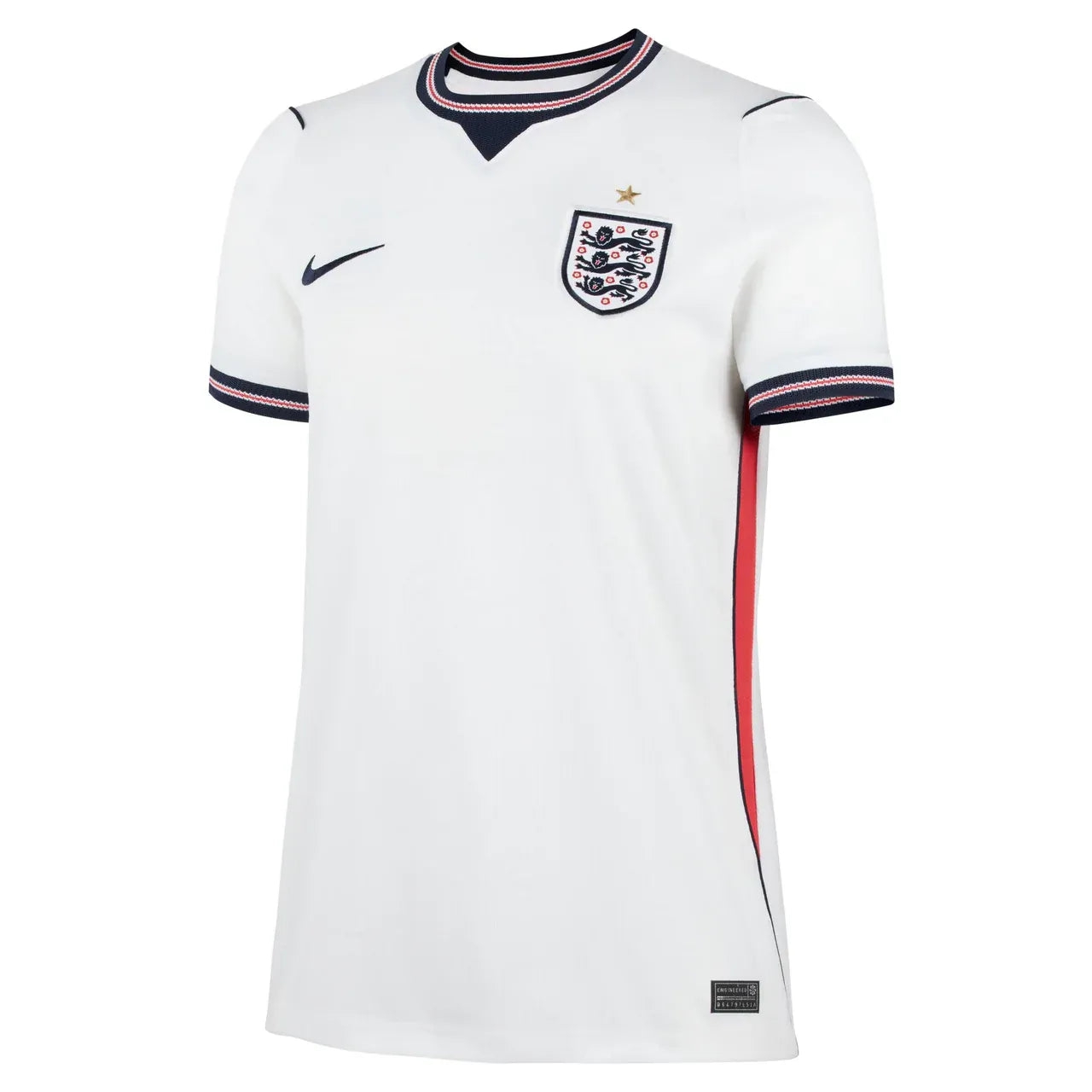
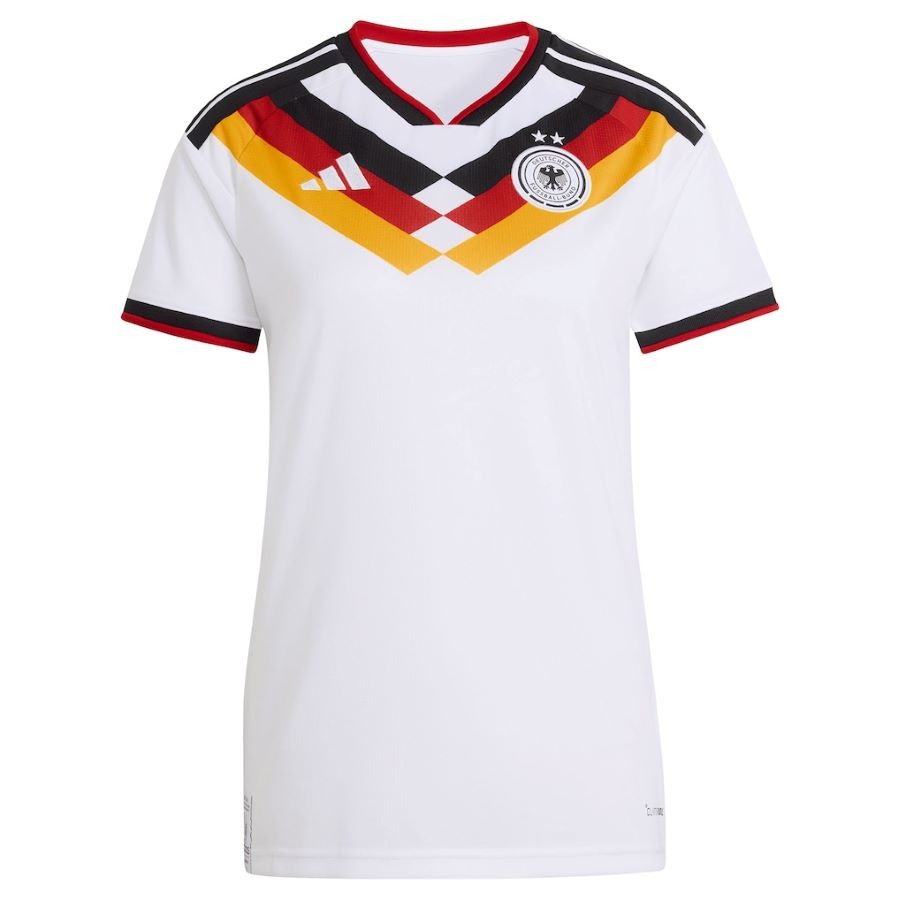
2026/27 national team kits
Kits for the nations covered above. Each card links straight to the product, with men's, women's and youth versions where the store stocks them.




Shop by nation
Related reading
In this guide
- What the Nations League is — and why it exists
- The four-league structure
- The 2026/27 groups in full
- How the league phase works
- What happens after the group stage
- Promotion and relegation, league by league
- Why 2026/27 is different: the move to three leagues
- How the promotion/relegation play-offs work
- Tie-breaking rules and group ranking
- How the Nations League links to Euro 2028
- Past winners
- A worked example
- Edge cases and common misconceptions
- FAQ
1. What the Nations League is — and why it exists
The UEFA Nations League is a European national-team competition introduced in 2018. Before it existed, national teams filled most non-tournament dates with international friendlies — matches that carried no competitive stakes and often paired teams of very different quality.
The Nations League replaced most of those friendlies with competitive matches against similarly ranked opponents. The mechanism is a divisional system with promotion and relegation, similar in principle to the league structure used in domestic club football: teams are grouped with opponents of comparable strength, and results determine whether they move up or down for the next edition.
Three things are worth being clear about:
- It is a standalone competition. Winning the Nations League makes you Nations League champion. It does not by itself qualify a team for the World Cup or the European Championship.
- It is linked to major-tournament qualifying. Nations League results can provide a secondary route into the play-offs for a European Championship, and previously for the World Cup. This link is confirmed separately for each tournament cycle.
- It has replaced most friendlies, not all of them. National teams still play friendly matches in some windows.
2. The four-league structure
For 2026/27, all 54 participating national teams are allocated to one of four leagues. Leagues A, B and C each contain 16 teams split into four groups of four. League D contains six teams split into two groups of three.
| League | Teams | Groups | Teams per group | Matches per team |
|---|---|---|---|---|
| League A | 16 | 4 | 4 | 6 |
| League B | 16 | 4 | 4 | 6 |
| League C | 16 | 4 | 4 | 6 |
| League D | 6 | 2 | 3 | 4 |
| Total | 54 | 14 | — | — |
How teams are placed in a league. Teams are not assigned to leagues randomly. The allocation for each edition is based on the final overall ranking of the previous edition. The 2026/27 leagues were built from the final overall ranking of the 2024/25 Nations League, adjusted for the promotion and relegation that took place at the end of that season. In practice: the top 16 ranked teams entered League A, the next 16 entered League B, the next 16 entered League C, and the remaining six entered League D.
Note on participating teams. UEFA has 55 member associations. 54 teams take part in the 2026/27 Nations League. Russia is not included, having been suspended from UEFA and FIFA competitions since February 2022.
3. The 2026/27 groups in full
The league phase draw took place in Brussels on 12 February 2026. Teams were seeded into pots within each league and drawn into groups. The resulting groups are listed below.
League A
| Group | Teams |
|---|---|
| A1 | France, Italy, Belgium, Türkiye |
| A2 | Germany, Netherlands, Serbia, Greece |
| A3 | Spain, Croatia, England, Czechia |
| A4 | Portugal, Denmark, Norway, Wales |
League B
| Group | Teams |
|---|---|
| B1 | Scotland, Switzerland, Slovenia, North Macedonia |
| B2 | Hungary, Ukraine, Georgia, Northern Ireland |
| B3 | Israel, Austria, Republic of Ireland, Kosovo |
| B4 | Poland, Bosnia and Herzegovina, Romania, Sweden |
League C
| Group | Teams |
|---|---|
| C1 | Albania, Finland, Belarus, San Marino |
| C2 | Montenegro, Armenia, Cyprus, Latvia |
| C3 | Kazakhstan, Slovakia, Faroe Islands, Moldova |
| C4 | Iceland, Bulgaria, Estonia, Luxembourg |
League D
| Group | Teams |
|---|---|
| D1 | Gibraltar, Malta, Andorra |
| D2 | Lithuania, Azerbaijan, Liechtenstein |
4. How the league phase works
Within each group, every team plays every other team twice — once at home and once away. Points are awarded in the standard way used across football competitions:
- Win: 3 points
- Draw: 1 point
- Loss: 0 points
There is no knockout football in the league phase. Teams accumulate points across six matchdays (four for League D teams), and the final group standings decide everything that follows: qualification for the knockout stage, direct promotion, direct relegation, or entry into a promotion/relegation play-off.
2026/27 matchday dates
| Stage | Dates |
|---|---|
| Matchday 1 | 24–26 September 2026 |
| Matchday 2 | 27–29 September 2026 |
| Matchday 3 | 30 September – 3 October 2026 |
| Matchday 4 | 4–6 October 2026 |
| Matchday 5 | 12–14 November 2026 |
| Matchday 6 | 15–17 November 2026 |
| League A quarter-finals; League A/B and League B/C play-offs | 25–30 March 2027 |
| League C/D play-offs | 23–28 March 2028 |
| Final tournament | June 2027 |
New for 2026/27: an expanded autumn window. The league phase opens with a longer international window running from 24 September to 6 October 2026, in which teams generally play four Nations League matches in close succession before returning to the competition in November for the final two matchdays. In previous editions this block of fixtures was spread across three separate windows.
5. What happens after the group stage
The league phase ends on 17 November 2026. What happens next depends on which league a team is in and where it finished.
League A: quarter-finals
The group winners and runners-up — eight teams in total — advance to the quarter-finals. The quarter-final draw pairs each group winner with a runner-up from a different group, and teams from the same group cannot be drawn against each other.
- Group winners are seeded; runners-up are unseeded.
- Each tie is played over two legs: first legs 25–27 March 2027, second legs 28–30 March 2027.
- The group winner hosts the second leg.
- The four quarter-final winners qualify for the finals.
The finals
The Nations League Finals bring together the four quarter-final winners in a single knockout tournament:
- Two semi-finals, a third-place play-off and the final.
- Semi-final pairings are decided by an open draw.
- The host is selected by the UEFA Executive Committee, preferably from among the four qualified teams. The host team is allocated to semi-final 1 as the administrative home team for scheduling purposes.
- The finals fall in June 2027, with the window reserved for 9–13 June 2027. UEFA had not confirmed the host at the time of writing.
- The winner of the final is crowned UEFA Nations League champion.
Leagues B, C and D: no knockout stage
There is no knockout football below League A. For teams in Leagues B, C and D, the league phase result is the whole season: it determines promotion, relegation, or a place in the promotion/relegation play-offs.
6. Promotion and relegation, league by league
This is the part of the format that most explanations get wrong, because the rules differ between leagues and because 2026/27 uses a transition-specific set of rules. Here is exactly how it works, league by league.
League A
| Final position in group | Outcome |
|---|---|
| 1st or 2nd | Qualify for the quarter-finals; remain in League A for the next edition |
| 3rd — two highest-ranked of the four third-placed teams | Remain in League A |
| 3rd — two lowest-ranked of the four third-placed teams | Enter the League A/B play-offs against League B runners-up |
| 4th — two highest-ranked of the four fourth-placed teams | Enter the League A/B play-offs against League B runners-up |
| 4th — two lowest-ranked of the four fourth-placed teams | Relegated to League B |
In other words, finishing third or fourth in a League A group does not automatically mean relegation. Only the two lowest-ranked fourth-placed teams go down directly. The other four teams in the bottom half of League A — two third-placed and two fourth-placed — get a two-legged play-off to defend their place.
League B
| Final position in group | Outcome |
|---|---|
| 1st | Promoted to League A |
| 2nd | Enter the League A/B play-offs against League A third- and fourth-placed teams |
| 3rd | Remain in League B |
| 4th | Enter the League B/C play-offs against League C runners-up |
League C
| Final position in group | Outcome |
|---|---|
| 1st | Promoted to League B |
| 2nd | Enter the League B/C play-offs against League B fourth-placed teams |
| 3rd | Remain in League C |
| 4th | Remain in League C |
League D
| Final position in group | Outcome |
|---|---|
| Any position | All six teams are promoted to League C |
League D is emptied at the end of 2026/27. This is a direct consequence of the competition's restructure, explained in the next section.
Summary: direct promotion goes to all group winners in Leagues B, C and D. Direct relegation applies to the two lowest-ranked fourth-placed teams in League A and, as the regulations stand, to fourth-placed teams in League B, who enter the League B/C play-offs. Everything else is decided by the promotion/relegation play-offs in March 2027.
7. Why 2026/27 is different: the move to three leagues
The 2026/27 Nations League is the fifth edition, and it is a transition season. From 2028/29, the competition moves to a three-league system with 18 teams in each league — 54 teams across Leagues A, B and C, with League D abolished.
For that to work, the leagues have to be resized from 16/16/16/6 to 18/18/18. The 2026/27 promotion and relegation rules are therefore deliberately engineered to produce 18 teams per league for the next cycle rather than the usual like-for-like replacement. This is why:
- League D is emptied entirely — all six teams move up to League C.
- Only two League A fourth-placed teams are relegated directly, instead of all of them, and more teams go through play-offs.
- Cross-league play-offs carry extra weight: four League A/B ties and four League B/C ties decide places across divisions.
For readers comparing the 2026/27 rules with the 2024/25 edition, this is the key difference: the number of teams relegated from League A is not the same. Use the current edition's rules, not the previous season's.
8. How the promotion/relegation play-offs work
The play-offs are two-legged ties between teams from adjacent leagues. The winner plays in the higher league for the next edition; the loser plays in the lower league.
| Play-off | Teams involved | Dates |
|---|---|---|
| League A/B | The two lowest-ranked third-placed teams and two highest-ranked fourth-placed teams from League A, against the four runners-up from League B | 25–30 March 2027 |
| League B/C | The four fourth-placed teams from League B, against the four runners-up from League C | 25–30 March 2027 |
| League C/D | Scheduled window for the two best-ranked fourth-placed teams from League C and the two runners-up from League D | 23–28 March 2028 |
Pairings and home advantage
- Pairings are determined by draw. Teams from the higher league are seeded and drawn against teams from the lower league.
- The team from the lower league plays the first leg at home. Effectively, the higher-ranked team hosts the decisive second leg.
- UEFA may apply additional draw conditions, subject to approval by its Executive Committee.
Deciding a two-legged tie
- The team that scores more goals on aggregate over the two legs wins.
- If the aggregate score is level, two 15-minute periods of extra time are played at the end of the second leg.
- If extra time does not separate the teams, a penalty shoot-out decides the tie.
There is no away goals rule. The away goals rule was abolished in UEFA competitions, and the Nations League regulations confirm it does not apply: a tie level on aggregate after two legs goes to extra time, then penalties, regardless of where the goals were scored. If you are looking for a rule that no longer exists, this is the one people ask about most.
Semi-finals, final and third-place match
- Semi-final or final level after 90 minutes: extra time, then penalties.
- Third-place match level after 90 minutes: no extra time — straight to a penalty shoot-out.
9. Tie-breaking rules and group ranking
When two or more teams in the same group finish level on points, the following criteria are applied in order. The first three are head-to-head; the rest are overall group records.
| # | Criterion |
|---|---|
| 1 | Higher number of points obtained in the group matches played among the teams in question |
| 2 | Superior goal difference in the group matches played among the teams in question |
| 3 | Higher number of goals scored in the group matches played among the teams in question |
| 4 | If teams are still equal, criteria 1–3 are reapplied exclusively to the matches between the teams still level. If that does not separate them, criteria 5–11 apply |
| 5 | Superior goal difference in all group matches |
| 6 | Higher number of goals scored in all group matches |
| 7 | Higher number of away goals scored in all group matches |
| 8 | Higher number of wins in all group matches |
| 9 | Higher number of away wins in all group matches |
| 10 | Lower disciplinary points total (yellow card = 1 point, red card = 3 points, two yellows in one match = 3 points), based on cards received by players and team officials |
| 11 | Higher position in the competition's access list |
Note the difference between the away goals rule in the group stage (criterion 7 — it is still used as a ranking criterion) and the away goals rule in two-legged ties (abolished). These are two separate things and are frequently confused.
Comparing teams in different groups
Several rules refer to the best or worst Nth-placed team across all groups — for example, "the two highest-ranked third-placed teams in League A". To compare teams from different groups, UEFA builds an overall ranking. Because group sizes can differ between leagues (League C groups have four teams, League D groups have three), the comparison excludes some results:
- When comparing teams that finished 1st, 2nd or 3rd, results against fourth-placed teams are not counted.
- When comparing teams that finished 4th, all results are counted.
Within that comparison, teams are ordered by: group position first, then points, goal difference, goals scored, away goals scored, wins, away wins, disciplinary points, and finally access-list position.
This ranking is what decides which third-placed teams stay in League A and which go into the play-offs — so the "best third-placed team" comparison is not merely administrative. It directly determines whether a team is safe or fighting for its place.
10. How the Nations League links to Euro 2028
The Nations League does not qualify teams directly for the European Championship, but it can provide a second route into the play-offs for the final tournament.
For the current cycle, the 2026/27 Nations League is expected to be linked to UEFA Euro 2028 qualifying, to be hosted in the United Kingdom and the Republic of Ireland. Based on their Nations League results, some teams will be given a second chance to enter the Euro 2028 play-offs.
One caveat matters here: at the time of writing this link is expected and pending — it depends on the formal approval of the format and regulations for Euro 2028 qualifying. UEFA's own guidance uses the word "expected" rather than confirming the mechanism. The general principle from previous cycles is that Nations League performance creates an additional play-off pathway, and if teams that would have been entitled to a play-off place have already qualified through the main qualifying route, those places pass down to the next best-ranked teams.
11. Past winners
Portugal are the defending champions and the only two-time winners of the competition.
| Edition | Final |
|---|---|
| 2019 | Portugal 1–0 Netherlands |
| 2021 | France 2–1 Spain |
| 2023 | Croatia 0–0 Spain (Spain won 5–4 on penalties) |
| 2025 | Portugal 2–2 Spain (Portugal won 5–3 on penalties) |
12. A worked example
Here is how the rules combine in practice. This is a simplified illustration using a hypothetical League A group — it is not a prediction and does not reflect current standings.
Suppose a League A group finishes like this:
| Pos | Team | Pts | What happens next |
|---|---|---|---|
| 1 | Team A | 14 | Quarter-finals; plays the second leg at home as a seeded group winner |
| 2 | Team B | 11 | Quarter-finals; drawn against a group winner from a different group |
| 3 | Team C | 7 | If ranked among the two best third-placed teams in League A → stays up. If not → League A/B play-off |
| 4 | Team D | 4 | If ranked among the two worst fourth-placed teams in League A → relegated. If not → League A/B play-off |
Two consequences are worth drawing out. First, Team C's fate does not depend only on its own group — it depends on how the third-placed teams in the other three League A groups performed, because only two of the four escape the play-offs. Second, Team D is not automatically relegated: a fourth-placed team can survive if its record is better than two of the other fourth-placed teams.
13. Edge cases and common misconceptions
"The Nations League is a qualifying competition."
Not directly. It is a standalone competition. It creates a play-off route into major tournaments and, in the past, has also been used to allocate qualifying play-off places. Qualification itself is earned in the main qualifying competition.
"Finishing last in your group always means relegation."
No. In League A for 2026/27, only the two lowest-ranked fourth-placed teams are relegated directly; the other two go into play-offs and can stay up. League C's third- and fourth-placed teams all remain in League C, and League D has no relegation at all this edition.
"The away goals rule applies in the play-offs."
It does not. Ties level on aggregate go to extra time and then penalties. Away goals are used only as a ranking criterion inside the group stage.
"Group winners in League A win the Nations League."
No. Winning a League A group earns a place in the quarter-finals — not the title. The champion comes from the four-team finals in June, reached only by the four quarter-final winners.
"Every league has groups of four."
Not in 2026/27. League D has two groups of three, so League D teams play four matches instead of six. This is also why cross-group comparisons ignore results against fourth-placed teams when ranking first-, second- and third-placed teams.
"The format is the same as the last edition."
It is not. 2026/27 is a transition season that reshapes the divisions ahead of the three-league, 18-teams-per-league structure from 2028/29. The relegation numbers from League A in particular differ from 2024/25.
14. FAQ
How does the UEFA Nations League work?
Europe's 54 national teams are split into four leagues (A, B, C and D) and then into groups of three or four teams. Each team plays its group opponents home and away. Final group positions determine promotion, relegation and play-off places, while the group winners and runners-up in League A progress to a knockout tournament to determine the champions.
What is the Nations League format for 2026/27?
Four leagues: A, B and C with 16 teams each in four groups of four, and League D with six teams in two groups of three. The league phase runs from 24 September to 17 November 2026, League A quarter-finals and the League A/B and B/C play-offs take place on 25–30 March 2027, and the four-team finals are in June 2027.
How many teams are in the Nations League?
54 teams take part in the 2026/27 edition. UEFA has 55 member associations, but Russia is suspended from UEFA and FIFA competitions.
How does Nations League promotion work?
All group winners in Leagues B, C and D are promoted automatically — to Leagues A, B and C respectively. Promotion is also available through the promotion/relegation play-offs: runners-up in Leagues B and C and the top two runners-up in League D can win their way into the league above. In 2026/27, all six League D teams are promoted to League C because the competition moves to three leagues in 2028/29.
How does Nations League relegation work?
In League A, the two lowest-ranked fourth-placed teams are relegated directly to League B; the two highest-ranked fourth-placed teams and the two lowest-ranked third-placed teams go into the League A/B play-offs, where losing means relegation. In League B, fourth-placed teams enter the League B/C play-offs against League C runners-up. League C's third- and fourth-placed teams all stay in League C for 2026/27, and League D has no relegation.
What happens after the Nations League group stage?
Three things can happen. In League A, the group winners and runners-up play two-legged quarter-finals in March 2027, with the four winners contesting the finals in June 2027. Across all leagues, teams that finish in play-off positions contest two-legged promotion/relegation ties. Everyone else's league allocation for the next edition is already settled by their group position.
Is there an away goals rule in the Nations League?
Not in two-legged ties. If a quarter-final or play-off is level on aggregate after both legs, extra time is played and then a penalty shoot-out decides it. Away goals are still used as a ranking criterion within the group stage when teams are level on points.
Does the Nations League qualify teams for Euro 2028?
Not directly. The 2026/27 Nations League is expected to be linked to Euro 2028 qualifying, giving some teams another chance to reach the Euro 2028 play-offs based on their Nations League results. This is pending formal approval of the Euro 2028 qualifying format.
What is the difference between League A, B, C and D?
They are divisions of different strength, and teams are placed in them according to their ranking from the previous edition. League A contains the highest-ranked teams and produces the champion; League D contains the lowest-ranked teams. Teams move between leagues by promotion and relegation, so the divisions change composition from edition to edition.
What happens if two teams finish level on points?
Head-to-head results decide first: points won in matches between the tied teams, then goal difference in those matches, then goals scored in those matches. If the teams are still level, those three criteria are reapplied to the matches between the remaining teams, before overall group goal difference, goals scored, away goals, wins, away wins, disciplinary points and finally access-list position are used.
Who has won the Nations League?
Portugal won the inaugural edition in 2019 and again in 2025, France won in 2021, and Spain won in 2023. Portugal are the defending champions.
Keep reading
- Browse all national team jerseys from the competing federations.
- National team guides: England, Spain, France, Italy, Germany, Portugal, Netherlands, Croatia, Belgium, Norway, Wales.
- Also in Leagues B and C: Scotland, Republic of Ireland, Poland, Sweden, Austria, Switzerland, Türkiye, Greece, Czechia, Ukraine, Slovenia, Bosnia and Herzegovina, Finland, Iceland.